

Also called shaped wells or horseshoe wells, these designs are getting more attention as operators look for ways to develop constrained or irregular acreage more efficiently. They’re popping up most often in the Permian, including the Midland and Delaware basins. That extra footage comes with a more complicated well path, which raises the stakes for tool conveyance, reliable stage isolation, and a plug-and-perf strategy that works across both legs.
In this article, we’ll explain what U-turn wells are, how they work, and what they mean for operators.
What is a U-turn well?
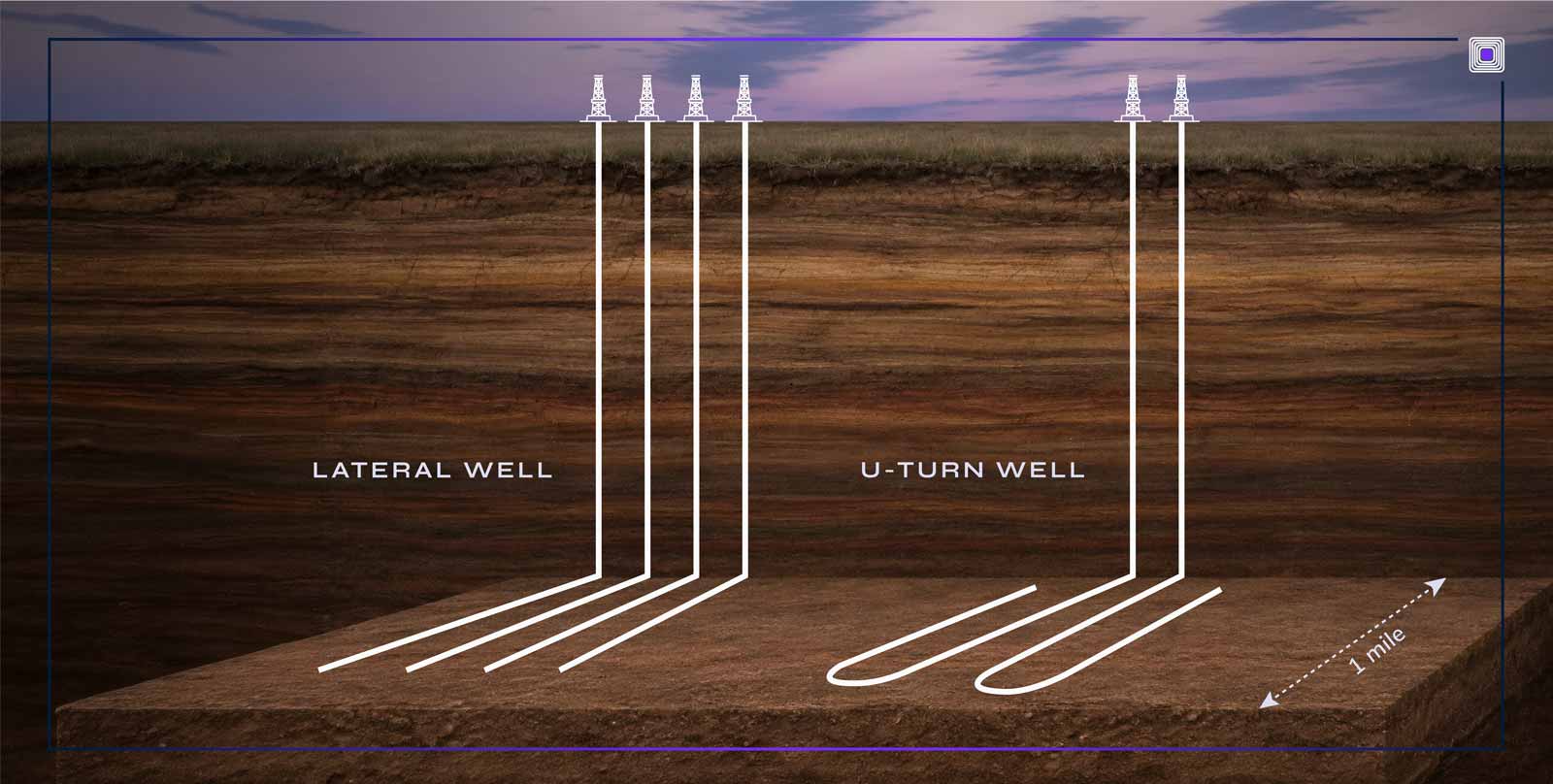
A U-turn well is a directional well with two horizontal lateral sections connected by a roughly 180-degree turn, creating a U shape. You may hear the same basic design called by several different names, including:
- U-turn lateral
- Horseshoe well
- Horseshoe lateral
- U-shaped lateral
- Paperclip well
Whatever name you use, the basic trajectory has three parts:
- Outgoing leg: The first straight horizontal section drilled away from the vertical wellbore
- Turn: The curved section that changes the well’s direction by roughly 180 degrees
- Return leg: A second horizontal section drilled back in the opposite direction, usually somewhat parallel to the outgoing leg
A conventional horizontal well typically has one lateral extending away from the vertical section. A U-turn well effectively folds that lateral back into the same general acreage footprint. That geometry can unlock resources where drilling one lateral isn’t economically practical.
Why are operators drilling U-turn wells?
The big attraction of U-turn wells is more reservoir contact from one vertical section. Long laterals can improve development efficiency, but lease boundaries don’t always cooperate. An operator may have good rock available across a narrow or oddly shaped drilling unit without enough room to drill the long straight lateral they’d prefer.
U-turn wells provide another option. They can make sense if you’re dealing with:
- Tight lease boundaries
- Narrow drilling units
- Irregular acreage shapes
- Mature fields with existing wells restricting development options
- Short-lateral inventory that may not justify another standalone vertical section
Instead of drilling one short well, then paying to drill another vertical section for the next lateral, operators may be able to connect two lateral sections with a turn. That can mean fewer vertical sections, pads, wellheads, and surface locations for a similar amount of productive lateral footage.
But that doesn’t mean U-turn wells are the answer everywhere. Geology, spacing, acreage configuration, drilling risk, and economics still decide whether the design makes sense. But when a straight line doesn’t fit the acreage, sometimes bending the rules (and the wellbore) does.
READ MORE: Navigating completions challenges in the Permian Basin
How does a U-turn well work?
At a high level, drilling a U-turn well follows this process:
- Drill the vertical section and curve into the target formation.
- Drill the first straight horizontal section, or outgoing leg.
- Build the U-shaped turn until the wellbore reverses direction.
- Drill the return leg back across the acreage, generally parallel to the first.
The goal is typically to create two distinct straight lateral sections from the same wellbore. The turn connects those sections, but operators may not treat the curve itself as productive lateral footage. Spacing, target selection, and stimulation design still have to account for both legs, changing wellbore orientation, reservoir stresses, and the relationship between the outgoing and return sections.
That makes the trajectory only one part of the job. You still have to design a stimulation program that develops the reservoir without creating avoidable interference or leaving resources behind. It’s another example of why creative drilling and completion strategies have to work together.
We’ve seen the same push for efficiency elsewhere in the industry. For example, zipper frac operations reduce idle time by alternating activity between wells. Simul and trimul frac operations take it a step further by pumping multiple wells simultaneously. U-turn wells answer the same broad problem from a different direction: get more from the assets you already have.
What makes U-turn wells more challenging to drill and complete?
Making a 180-degree turn thousands of feet underground with massive industrial equipment is much harder than doing a U-turn in your pickup truck. To get that economic upside, you have to complete the trajectory without creating new problems that wipe out the efficiency you were chasing in the first place.
On the drilling side, teams have to manage issues such as:
- Tortuosity and dogleg severity: The turn needs to be aggressive enough to reverse direction without becoming so severe that later operations suffer.
- Torque and drag: Longer, more complex well paths increase mechanical resistance during drilling, running casing, wireline tool deployment, drilling out the well and future workovers.
- Wellbore stability: Changing azimuth can change how the wellbore interacts with the in-situ stress regime.
- Directional control: Keeping both straight sections in the target requires detailed planning and close execution.
- Contingency planning: Teams need to know what they’ll do if the planned turn becomes impractical.
The completions team inherits that geometry. Wireline tool strings, downhole tools, perforating equipment, frac plugs, and coiled tubing may all need to travel through the turn and reach the return leg. That means accounting for friction, drag, tool-string length, pumpdown requirements, and future intervention access before the first tool goes in the hole.
Successful U-turn programs depend on more than a good trajectory on paper. Pre-job modeling, real-time monitoring, and tight coordination between drilling and completions teams can help crews catch problems before they turn into expensive surprises downhole.
None of these considerations are reasons to avoid U-turn wells. They’re just engineering problems that engineers can plan around. But it’s important to be aware that when you change direction downhole, the margin for sloppy execution gets smaller.
READ MORE: What copy-paste engineering means for your completion
What does a U-turn well mean for frac plug selection?
Some completion strategies approach the two lateral legs differently. One option is to run two different types of frac plugs: composite plugs through the first leg, then dissolvable plugs for the return leg. It’s a common choice because of concerns about reaching and drilling out composite plugs later.
That can make sense in the right operation. But it isn’t automatically necessary just because there’s a turn in the well, and a U-turn trajectory shouldn’t be the only factor that dictates plug selection. The better questions are:
- What intervention access will be available after stimulation?
- Can coiled tubing or another intervention method reliably reach the return leg?
- What downhole conditions will the plugs encounter?
- What isolation performance does the completion require?
- How important is maintaining one repeatable plug program across both legs?
If the operator can access the second leg when required, a dependable composite plug can remain a practical choice for consistency throughout the well. Running one well-understood plug design across both lateral sections can simplify procedures, tool compatibility, inventory, and field execution.
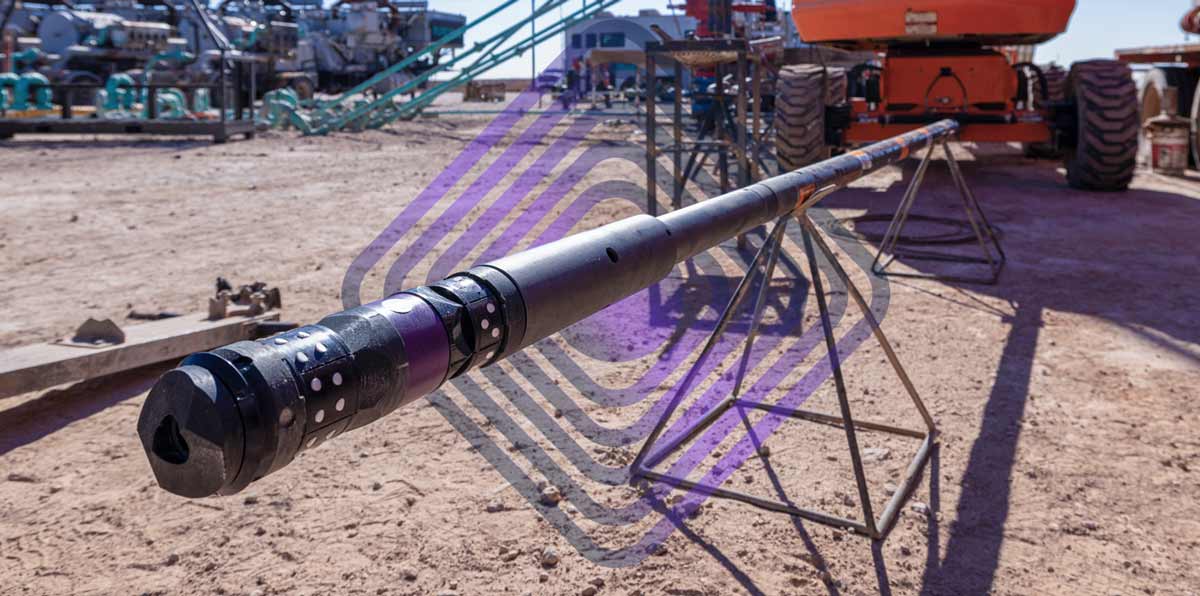
Make your plug choice based on the well design, intervention philosophy, formation conditions, and execution plan, not just the presence of a turn. Whichever plug you decide to run, Repeat Precision supports both approaches. PurpleSeal™ frac plugs provide a field-proven composite option, while PurpleReign™ dissolvable frac plugs offer a dissolvable alternative when the completion plan calls for one.
READ MORE: Composite vs. dissolvable frac plugs
Why reliability matters more in a U-turn completion
A U-turn well is meant to improve efficiency. Every tool in the completion should support that same goal. A reliable frac plug helps provide predictable isolation from one stage to the next, and consistent drill-out helps keep post-frac operations moving. Using a repeatable plug strategy across the well can remove another variable from an already complicated completion.
The opposite is also true. A frac plug failure is never welcome, but it’s even more of a problem to troubleshoot in a complex U-turn trajectory. It adds another layer of difficulty to a job that already asks more of the drilling and completions teams. The more ambitious the well design becomes, the less sense it makes to introduce avoidable uncertainty elsewhere.
Good U-turn execution comes from making sure the drilling program, stimulation design, intervention strategy, and completion equipment all work as one system.
Are U-turn wells likely to become more common?
They’re certainly becoming harder to ignore, and interest leads to adoption. Modern U-turn applications gained early visibility in the Delaware Basin before operators began pursuing similar designs elsewhere in the Permian and other U.S. shale plays. The concept is particularly relevant in the Midland and Delaware basins, where acreage geometry and mature development can make conventional straight-lateral planning difficult.
The reason for the growing interest isn’t complicated. Operators keep looking for ways to:
- Improve the quality of their remaining inventory
- Develop acreage that doesn’t fit conventional lateral designs
- Increase productive footage without adding another vertical section
- Reduce surface development where practical
- Get more capital efficiency from existing positions
U-turn wells belong to the same broader trend that’s driven longer laterals, zipper frac, simul frac, and other changes to unconventional development.
That doesn’t mean every future lateral is going to double back on itself. Some acreage is perfect for a conventional straight well. Some isn’t. U-turn wells simply give drilling and reservoir teams another tool when the geometry gets awkward. As operators build more experience with them, they become less of an experiment and more of a legitimate development option.
U-turn wells require a full-well approach to efficiency
A U-turn well uses two horizontal legs connected by an approximately 180-degree turn to increase reservoir exposure within acreage that may not accommodate one equivalent straight lateral. The concept is clever, but the well still has to work. That means controlling the trajectory, managing torque and drag, getting completion tools through the curve, maintaining reliable stage isolation, and making sure the intervention plan works across the entire well.
When you're drilling a more complicated well to improve capital efficiency, the last thing you need is unreliable equipment eating those gains. At Repeat Precision, we build completion tools around repeatable field performance. Whether your plan calls for composite plugs, dissolvable plugs, or a combination of downhole tools, the plug strategy should fit the operation. Not the other way around. Contact us to talk through your next completion.