


Defining Downhole Tools
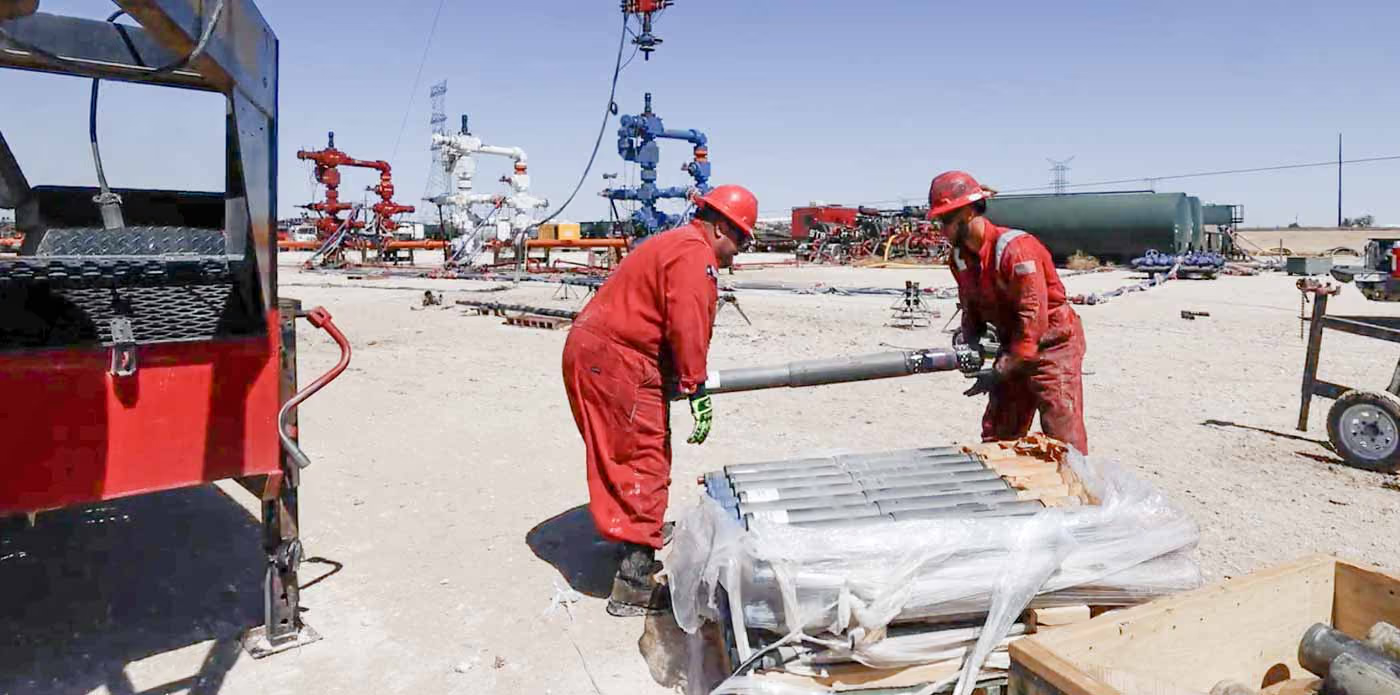
Downhole tools are any pieces of equipment that are run below the wellhead by wireline or service rig (think coiled tubing or traditional workover rig). This could include drilling a straight hole, setting a packer, logging a well, or fishing out a stuck BHA. If a piece of equipment goes below a wellhead to help drill, complete, maintain, or produce a well, it qualifies as a downhole tool. These tools are built to survive extreme heat, high bottom hole pressure, and corrosive well fluids.
Think of a downhole tool as an extension of your hands and eyes underground. From the surface, there’s only so much control we have over what’s happening thousands of feet down. Downhole tools bridge that gap. They let us manipulate the wellbore, measure what’s going on in real time, and protect the well’s integrity through every phase of its life.
Categories of Downhole Tools
There are several different categories of tools that you’re likely to find in the field. We’ve broken them out into groups for easy reference:
1. Drilling Tools
Drilling is where everything starts, and the downhole tools we run at this stage set the tone for the rest of the operation. A rough hole or an uncontrolled deviation can create headaches that make for a hard time casing the well. That’s why drilling tools like the ones below are built for control and durability under punishing conditions.
- Stabilizers are placed near the drill bit to keep the bottomhole assembly centered. By reducing wobble or “walking,” stabilizers help drill smoother, straighter holes.
- Reamers condition the hole when the wellbore starts getting tight or irregular by enlarging spots where cuttings or swelling formations have closed in.
- Drilling jars act like a hammer downhole. If other components get stuck, a jar delivers controlled up-or-down impacts to move it free.
- Shock subs or vibration dampeners cut down on vibration to protect your drill string and extend the life of your bit.
- MWD (measurement while drilling) tools provide directional and positional data in real time, so you know where the bit is relative to the plan.
- LWD (logging while drilling) tools measure formation properties while drilling, giving you essential data about resistivity, porosity, and density.
2. Completion Tools
After the hole is drilled and cased, it’s time to complete the well. Completion tools transition a well from potential to production. At this stage, your downhole toolbox will include components like the ones below.
- Frac plugs and packers isolate zones in the wellbore, preventing unwanted crossflow between formations. They can be permanent or retrievable, depending on your needs.
- Bridge plugs temporarily isolate sections of the well during stimulation, testing, or plug-and-perf work. They hold strong under high pressure until it’s time to mill them out.
- Setting tools provide the mechanical, hydraulic, or explosive force required to expand and anchor your plugs or packers in place.
- Perforating guns punch controlled holes through casing and cement into the formation, giving the frac slurry a pathway in.
Some downhole tools are designed with features that make intervention easy. For example, the StageSaver is adapted to PurpleSeal™ frac plugs for use in screen-outs and misruns. Just flow the device off seat—no need to catch it at the surface.
READ MORE: Frac plug alternatives: can plugless fracturing replace conventional frac plugs?
3. Well Intervention Tools
Real-life operations throw surprises into your well. When something needs fixing or retrieving, intervention tools like these can help solve these challenges. This extends the working life of your assets while trying to minimize unexpected expenses.
- Fishing tools are used to latch or cut a piece of equipment downhole and bring it back to surface. They come in all shapes and sizes to help you retrieve your target.
- Milling tools grind out plugs, packers, cement, casing sections, and more. Can’t pull something out? Just mill right through it.
- Coiled tubing and wireline deployed tools are fast, efficient ways to get specialized equipment downhole to clean the wellbore and recomplete a zone if you think more resources can be unlocked from the well.
READ MORE: Meet the StageSaver: your screen-out insurance policy
4. Measurement and Evaluation Tools
You can’t manage what you don’t measure. Measurement and evaluation tools give operators real-time visibility into what’s happening deep underground.
- ESP downhole sensors provide accurate downhole data in real time to help you extend your ESP’s run life and max out production.
- Memory gauges measure flow, pressure, and bottom hole temperature over varying periods of time (ranging from hours to years) to give you valuable insights about well performance.
- Production logging tools help identify which zones are flowing and which ones aren’t after a well is completed. That information drives workover or stimulation decisions.
READ MORE: Emerging trends in completions
Why Downhole Tools Matter
Why do we put so much effort into designing, deploying, and maintaining downhole solutions? It boils down to your bottom line and operational safety. Downhole tools help you get the done right, in all the ways that matter.
- Wellbore Stability: The right tools prevent washouts and collapses during drilling, as well as compromised completions. A stable wellbore is a safe and productive wellbore.
- Improved Production: Your tools influence how productive your wells are, so choose tools that let you extract more oil and gas, faster.
- Reduced Downtime: Cut down on expensive non-productive time with reliable downhole tools, along with intervention tools that solve problems quickly.
- Increased Safety: Prevent HSE incidents with tools that ensure your fast-paced operations positively affect your personnel and environment.
- Informed Decisions: See what’s going on downhole with measurement and evaluation tools so you can make confident decisions on the fly.
READ MORE: Frac plug forensics: Our takeaways from DarkVision’s report
Downhole tools aren’t as big and flashy as surface equipment, but they quietly carry the load in every stage of a well’s life. That’s why your tool provider matters. At Repeat Precision, we take pride in design, manufacture, and deliver completion tools that are field-proven and built with the end user in mind. Contact us and let’s talk about upgrading your downhole toolbox.
.jpg)
