
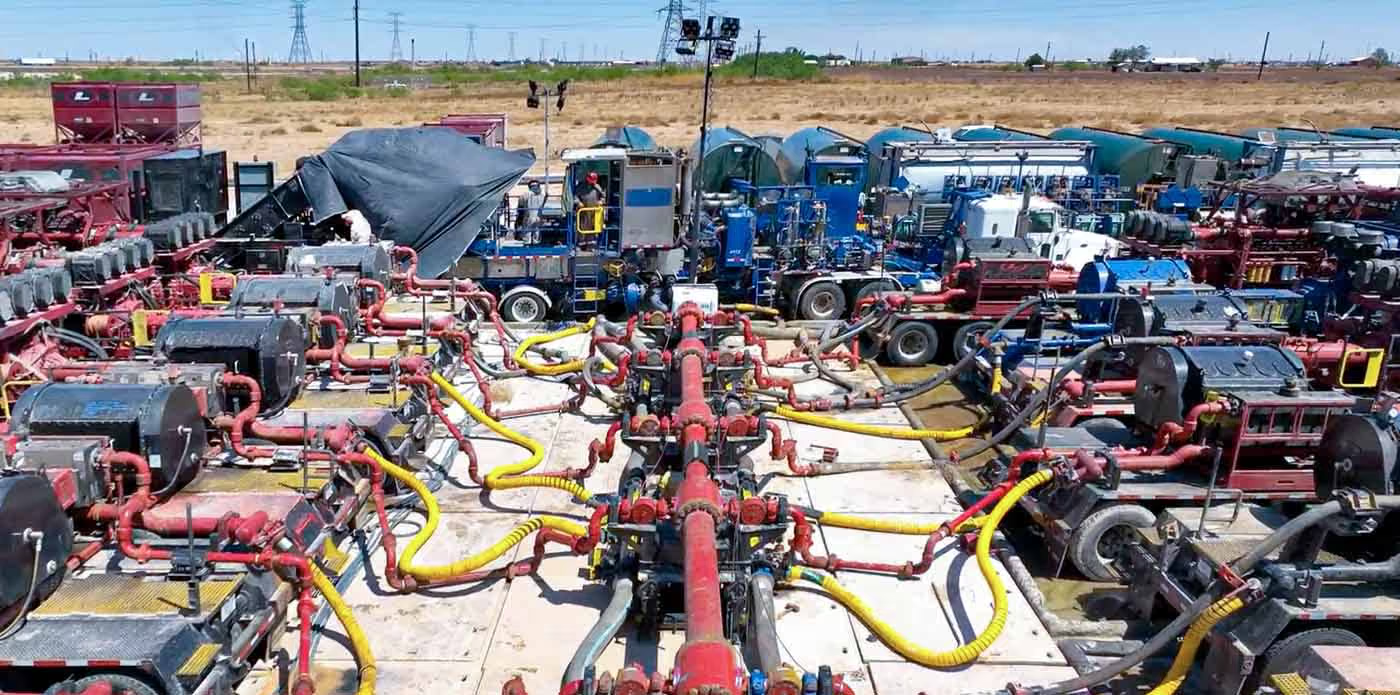


Challenge #1: Varied Geology
The Permian Basin is famous for its stacked pay zones and massive reserves, but that’s only half the story. The challenge going forward is the geology—layers of rock that change fast and often, even within the same lateral. You might be drilling through brittle carbonates one minute and ductile shale the next. This kind of formation heterogeneity means you can’t just copy-paste your frac engineering from one well to the next.
Operators are leaning on advanced diagnostics like microseismic and fiber-optic monitoring to get a handle on what’s happening downhole. These tools help map out fracture geometry and fine-tune well and stage spacing, but they also add cost and complexity. You’ll need to find the right balance between data-driven design and practical field experience.
READ MORE: Oriented perforating strategies and frac plug performance
Challenge #2: Downhole Conditions
Let’s talk about what’s happening where you can’t see it. Downhole conditions in the Permian can be tough. You’re dealing with a wide range of pressures from one bench to the next, varying levels of reservoir depletion, and parent-child interactions that can impact EUR unless properly managed. Practically speaking, as laterals get longer, keeping wellbore integrity intact and avoiding plug slippage is a constant battle.
Sand is another headache. If you’re considering simul- or trimul-frac operations, screen-outs are always lurking. Besides a proper blender, picking the right proppant and mesh size is key, but even then, you’re never totally in the clear. And if you hit a naturally fractured zone, you might see unexpected fluid loss or pressure communication between stages. This can lead to frac hits and throw off your entire plan.
Challenge #3: Parent-Child Wells
With so many wells packed into the same acreage, frac hits have become a fact of life in the Permian. When you frac a new (child) well near an older (parent) well, pressure can travel through the rock and mess with the parent’s production. You might notice changes to offset well pressure and fluid migration. Or, if you’ve really pissed off the frac gods, you might even damage the wellbore or cause casing deformation.
There’s no silver bullet for frac hits. Some teams use pre-job modeling and real-time monitoring to predict or minimize hits. Others might tweak pump rates or stage sequencing, or even refrac the parent well. Every tactic has its upsides and downsides. The right downhole solution will depend on your specific well.
READ MORE: Frac plug alternatives: can plugless fracturing replace conventional frac plugs?
Challenge #4: Water Management
Hydraulic fracturing takes a lot of water. In the Permian, that’s a big deal. Depending on the regulatory environment, fresh water isn’t always easy to come by. Operators are getting creative by recycling produced water, using brackish sources, and building out bigger water infrastructure. But moving and treating all that water brings its own set of headaches, from scaling and corrosion to keeping bacteria in check.
Disposing of produced water is also getting trickier, thanks to tighter regulations and concerns about induced seismicity. Some operators are experimenting with non-potable water sources or advanced treatment technologies, but there aren’t any clear fixes that fit every completion. It’s a balancing act between staying compliant, keeping costs down, and making sure operations run smoothly.
Challenge #5: Operational Efficiency
The Permian is a fast-paced basin. Drilling and completions cycles are short, and any downtime can hit your bottom line hard. Supply chain hiccups, equipment failures, and labor shortages are all part of the daily grind.
To keep things moving, more operators are turning to automation and digital tools like real-time data analytics, cloud-based remote monitoring platforms, and automated frac fleets and wireline units. These technologies can help cut non-productive time and make better use of resources, but they also require investment and a team that knows how to use them.
Challenge #6: Adapting and Innovating
The Permian Basin is a tough place to run completions. But with the right mix of technical know-how, field experience, and a willingness to try new things, operators are finding ways to get the most out of every well. As you face the other challenges listed in this article, you’ll need to adapt to changing conditions to keep your operation on time and on budget.
READ MORE: Emerging trends in completions
At Repeat Precision, we know what it takes to succeed in the Permian. Our products are built to handle the region’s toughest wells, and we’re always working with customers to solve real-world problems. If you’re looking for downhole tools that work as hard as you do, contact us now. We’ll tackle the Permian’s challenges together.
.jpg)
