
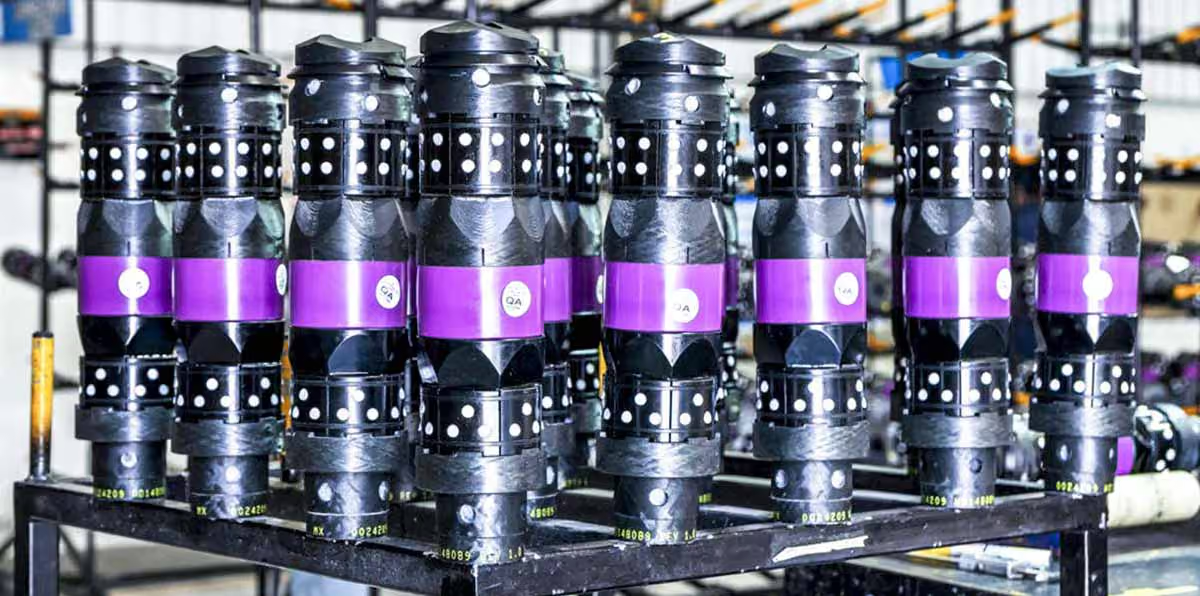


The purpose of this study was to determine a detailed workflow for comparing frac plug performance and define a broad set of run-in, frac, and drill-out requirements. While they were at it, ConocoPhillips also identified ways to detect and prove frac plug failure. Repeat Precision’s PurpleSeal™ composite frac plug was included in this study.
In this article, we sum up the report with our top takeaways and insights you can apply to your own completion program.
Project Background
In a 2022 study, certain frac plug design elements were shown to reduce fluid bypass around the plug’s exterior. Conoco used these design elements to rank multiple frac plugs that were available on the market at the time of the 2023 study. The study’s plug design criteria included features that are linked to improved zonal isolation in horizontal wells, like:
- Composite frac plug materials (with metallic or ceramic button slips)
- Interlocking design
- Upper and lower slip for proper retention and sealing
- Anti-preset mechanisms to help reduce costly downtime
- Large element contact area and anti-extrusion mechanism to prevent fluid bypass
- Setting tool considerations
READ MORE: Vaca Muerta study: Your new isolation testing workflow
Test Setup
The top six plugs were used in a single-wellbore trial with eight stages per plug for 48 total consecutive frac stages. The main priorities of the study were frac stage isolation (which has the largest impact on well economics and acreage improvement) and operational efficiency to minimize non-productive time and improve drill-out times.
The study also included four types of diagnostics to prove isolation:
- Perforation entry-hole erosion
- Radioactive tracers for tagging proppant
- Treatment rate/pressure plots
- Casing wear patterns at plug setting depths
For each plug, three stages included radioactive tracer, two stages included a planned shutdown, and the rest were pumped normally. Each plug was then drilled out with documented time, weight, and cuttings size. The radioactive tracer was used to determine proppant placement, and ultrasonic imaging showed wear and erosion at plug setting depths and perforation entry, respectively.
PurpleSeal™ Performance
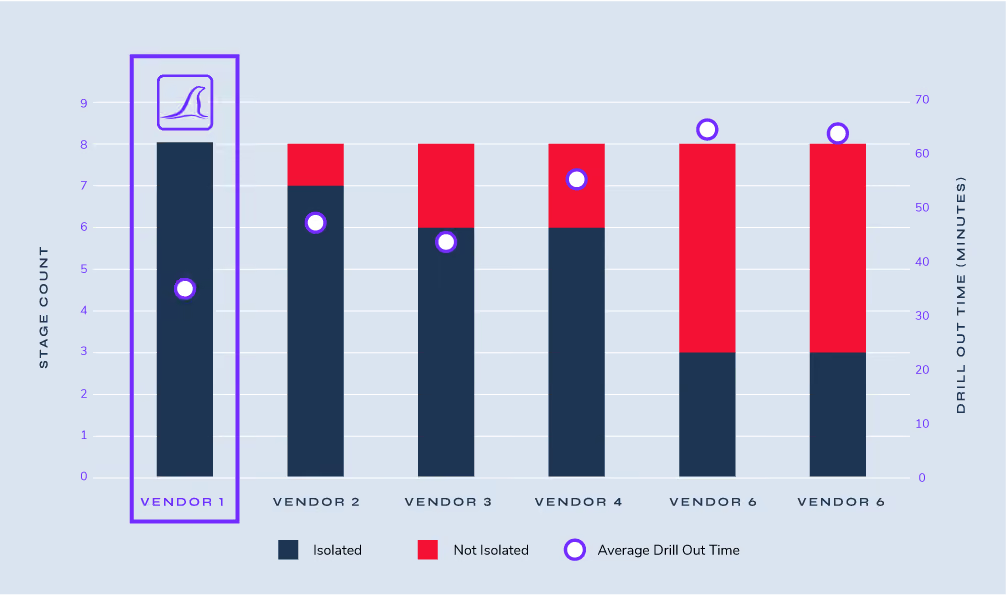
In this study, Repeat Precision was the top-performing plug, with the PurpleSeal™ composite plug being used. As shown in the diagram below, only the PurpleSeal™ plug achieved complete isolation in all eight frac stages. It also achieved the fastest drill-out time and least milling damage of all plugs tested. (It wasn’t the point of the study; however, this data helped the authors draw an important conclusion that the best sealing plug also drilled the best.)
READ MORE: Why plug slippage happens (and how to prevent it)
Plug Isolation & Drill Out Time by Vendor
Top Takeaways for Industry
ConocoPhillips didn’t set out to prove that PurpleSeal™ plugs are the best in the business—but their study results don’t lie. This study also led to a number of other insights you’ll want to apply to your own completion:
- No single data source is sufficient to evaluate plug isolation. Combining multiple diagnostics improves accuracy.
- Top-performing frac plugs have several design features in common: a large sealing element for better engagement with the casing, a dependable ball and seat interface, and interlocking features to support consistent plug performance.
- Most plug leaks occur at the ball and seat, not around the plug. This is commonly seen with intermittent shutdowns—in fact, this test showed a 50% failure rate for zonal isolation after a shutdown. Be sure to ask your plug provider if they test with a frac ball in their labs (spoiler alert: most don’t).
- Shutdowns can affect isolation. As a result, proppant distribution could be uneven across perforation clusters. You can reduce this risk by avoiding shutdowns and step-down tests in your own completion whenever possible.
- Frac plugs with good isolation and efficient drill/wash times also had reduced milling damage. When plugs maintained their integrity, they were more likely to have greater performance. The study found that one plug (whose button pattern is uniquely consistent with PurpleSeal™) had the best performance and least milling damage of all tested plugs.
- Isolated frac stages exhibit a higher uniformity index across perforations. This means stages are receiving more proppant when good frac plugs are present - just like you drew it up on the whiteboard.
Want to add the industry’s favorite frac plug to your completion? Contact us today and learn more about PurpleSeal™ composite frac plugs.
.jpg)
