PurpleSeal™ PS-C Composite Frac Plug

The real deal PurpleSeal™
PurpleSeal™
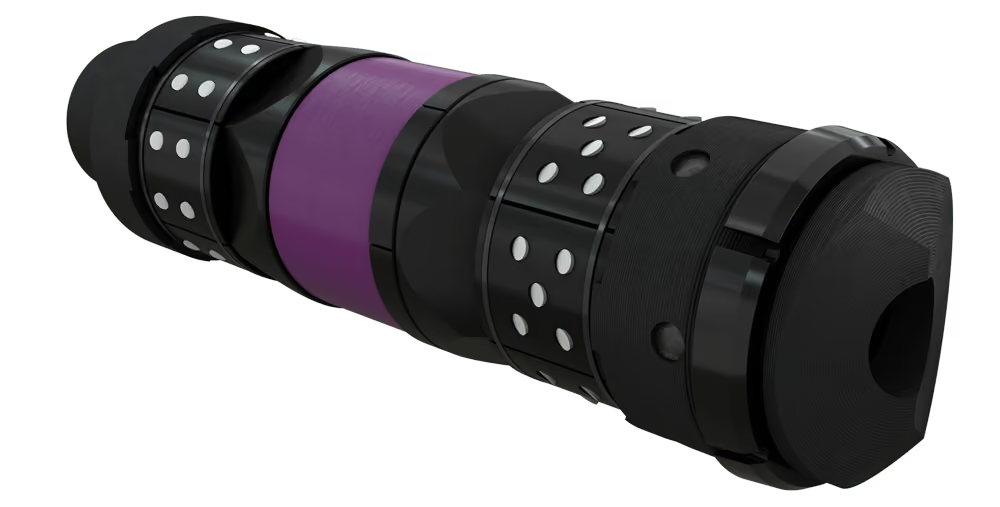
The PurpleSeal™ PS-C composite plug with ceramic buttons is a zero-metal, all-composite frac plug with low material volume, which helps you get a fast, clean drill-out every time.
This composite plug features interlocking castellations on the slips, muleshoe, and load ring, paired with a planar slip-to-cone interface. Its unique design keeps components from rotating, allows for even slip expansion during set, and ensures a firm hold during drill-out.
Backed by over 200,000 field deployments and consistently great reviews across multiple basins, it’s no wonder why PurpleSeal™ composite plugs are North American operators’ plug of choice for low-pressure drill-outs.
You might also be interested in:

Benefits of the PurpleSeal™ PS‑C Composite Frac Plug
PurpleSeal™ PS‑C is the quick-drillable frac plug that operators ask for by name because of its repeatable seal and reliable performance across thousands of stages.
- Reduced time and costs
PurpleSeal™’s low material volume and all-composite plug construction cut down on bit wear and debris and speed up operations, especially in long laterals. - Reliable isolation
Boost well integrity and production through reliable zonal isolation with PurpleSeal™’s top and bottom slips, over 1” of casing engagement, and a patented rubber element backup for a secure hold. - Predictable performance
Our plugs are engineered for consistency with interlocking castellations and planar slip-to-cone interfaces that keep components from rotating and ensure even slip expansion. - Shorter stage times
PurpleSeal™ runs at higher speeds to help you get to the next stage faster because of its streamlined design and integrated pump-down fin. - Customizable gun string
Run PurpleSeal™ frac plugs with your current completion accessories, or pair our plugs with PurpleSet™ setting tools and PurpleFire™ perforating guns. - Confident completions
With over 275,000 deployments under our belts, PurpleSeal™ composite plugs are the trusted choice for operators wanting reliable results without costly surprises.
Features of the PurpleSeal™ PS-C
- 10,000 PSI
- Lightweight materials for industry-leading drill-out performance
- Patented rubber element backup to prevent casing erosion damage
- Tested in oval casing with exceptional conformity (10,000 psi tested)
- Ceramic buttons
- Pump-down fin included with every plug for more fluid savings
- Anti-preset features in the plug and wireline adapter kit
- No run-in-hole speed limits when pumping
- Ball-on-seat capable
- Top set
- Signature rubber purple seal

How to use it
- Remove the PurpleSeal™ composite frac plug from its box.
- Assemble the three-part adapter kit onto the setting tool.
- Insert five or six screws into the plug and adapter kit.
- Start pumping from surface and enjoy the speed limit–free ride!
Frequently Asked Questions

What makes the PurpleSeal™ frac plug different?
The PurpleSeal™ composite plug comes with certain luxuries that other plugs just don’t offer:
- Fully rated top and bottom slips to ensure a strong pack-off
- Built-in rubber element backup system to reduce the risk of rubber flowing during frac and causing plug slippage
- Over 1” of casing engagement by the rubber element when the plug is set
- Flat surfaces on the cones and slips to ensure even casing engagement, smaller debris, and better drill-out
- Fused slips and cones to avoid pre-sets, side damage, and excessive flow rates during pump-down
- Better pump-down than 99% of frac plugs in the oil field
- Best-in-class service that’s built into our plug pricing
Why should I choose a composite frac plug over a plug with a cast iron slip?
Composite plugs are known for being reliable and drilling out easily. They’re also lighter and easier to manufacture than plugs with cast iron slips, which makes them less expensive. In comparison, plugs with cast iron slips are much denser than composite and leave more material behind during drill-out. This can cause plenty of problems, especially with long laterals. It’s better to choose a composite plug like PurpleSeal™ from Repeat Precision, one of the industry’s top frac plug manufacturers.
How much does the PurpleSeal™ frac plug weigh?
The weight of a PurpleSeal™ composite plug will vary depending on which size you’re using:
- 480: 16.82 lb
- 455: 13.71 lb
- 438: 12.23 lb
- 360: 7.18 lb
What material are the slip bands on the PurpleSeal™ frac plug?
The slip bands on PurpleSeal™ frac plugs are made from the same material as the mandrel, cone, mule shoe, and other components. These aren’t your grandpa’s frac plugs. You won’t find baling wire or rubber bands here—just thinly wrapped, filament-wound tubes that are precisely machined to break in a pre-determined range of force.
How quickly can I run a PurpleSeal™ drillable frac plug?
PurpleSeal™ composite frac plugs have just one speed limit: not free falling over 400 feet per minute in the vertical or curve. Otherwise, if you want to go fast—and we respect that hustle—we suggest pumping 2–4 barrels per minute to offset the fluid bypass around the plug.
We run upwards of 75% of fluid speed with the pump-down fin, while other plugs are 40–50
- For 5.500” casing applications, keep the pump-down fin on. You should expect 550-650 feet per minute when you’re pumping 18–20 barrels of water per minute.
- For 4.500” casing applications, keep the pump-down fin on. Expect 450–500 feet per minute when you’re pumping 14–16 barrels of water per minute.
In all applications, when you remove the pump-down fin, expect to lose about 50–75 feet per minute.
How fast can I pull the PurpleSeal™ plug out of the hole?
While we love working fast, we recommend pulling out of the hole no faster than 200 feet per minute while the plug is still attached to the BHA.
Frac plug vs bridge plug: what’s the difference?
When comparing our frac plugs vs bridge plugs, the main difference is that frac plugs have a flow-through mandrel ranging from 1-1.25 inches in diameter. Both PurpleSeal™ fracking plugs and bridging plugs are rated for 10,000psi from above, whereas bridge plugs are also rated from 8,000 psi from below to keep your wellbore in check.
What software pairs with PinPoint?
Use Warrior System with Unifire to pair with PinPoint internal orienting guns.
What addressable switch can I use?
We can configure our systems to run with most wired switches. That said, we recommend using SRS switches due to their communication system, support, and track record of success.
What shaped charge can I use?
Our systems are designed to work with any available charges on the market. For extra convenience, you can get Forcellant power charges delivered along with your PinPoint guns.
What differentiates Repeat Precision’s offerings in the perforating market?
When you work with Repeat Precision, you get the best service in the industry—anytime, anywhere, completely free of charge. Our technical personnel hand-deliver your products to the site for that extra level of attention. And when you have questions, you can always ask the person who knows the answer, whether they designed the system or just delivered it.
What setting tool can I use with your systems?
Our systems are designed to run with all setting tools. We especially recommend disposable setting tools because they expose the bottom hole assembly to a certain amount of force during plug setting.
Do you offer an internally oriented perforating system?
Yes, PinPoint utilizes internal weighting to orient the charge assembly by utilizing gravity.
Why should I choose PinPoint?
Other internal orienting systems struggle with communication due to inconsistent connection caused by weak grounding, usually through the use of bearings, brushes, or grounding springs. Unlike these other systems, PinPoint offers a triple-redundant grounding system that grounds directly to the sub. The precisely machined surface provides the most robust electrical integrity, giving you a better connection.