
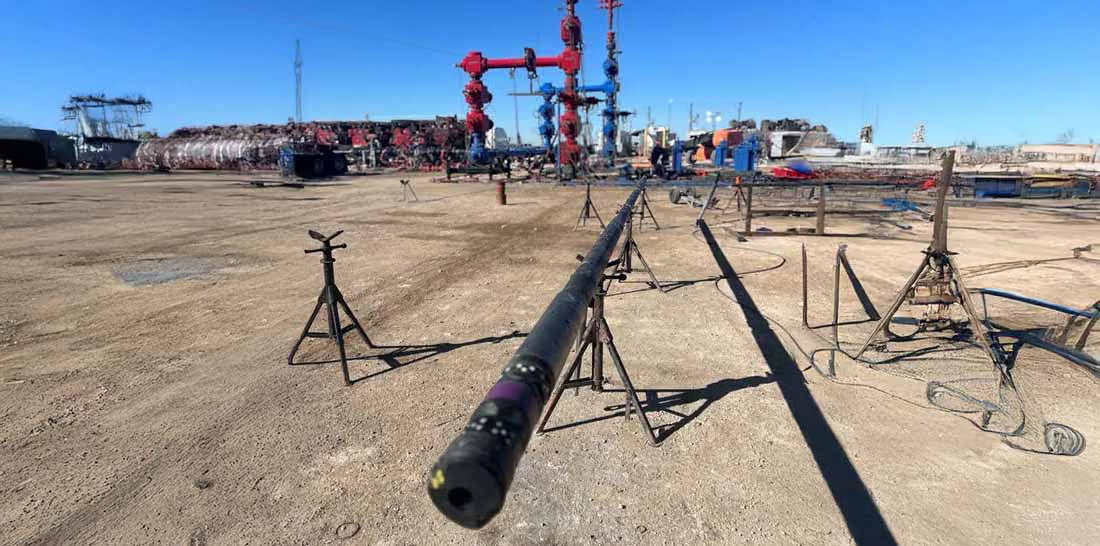


That’s what they’re traditionally used for, anyway. And we don’t much care about tradition when it comes to giving our customers the best frac of their careers. Both plugs can be used both ways, in our experience. So we’ll share the essential details and let you decide which type of plug is best for your completion.
These are the key differences between frac plugs vs bridge plugs, using the PurpleSeal™ composite frac plug and the PurpleSeal™ composite bridge plug as our examples:
Pressure isolation
While both frac plugs and bridge plugs both do a great job during drill-out, only bridge plugs can give you the confidence that the plug is sealed through the ID as well as against the casing. Most composite bridge plugs, like the PurpleSeal™ bridge plug, utilize a combination of composite components to permanently block the ID of the plug versus a ball and seat with composite frac plugs. Although Repeat Precision has perfected the ball-on-seat design of its PurpleSeal™ composite frac plug, the added confidence of permanently installed components in the ID of the plug ensures your frac is going where you want it to.
READ MORE: Frac balls: what they are and why they matter
Material composition
Frac plugs are often made with drillbit-friendly materials for faster, more efficient drill-out. For example, the PurpleSeal™ frac plug contains only composite with ceramic buttons—no metal anywhere to be found.
Bridge plugs, on the other hand, can contain high-strength cast iron for slips and teeth so that their holding strength does not degrade over time. They can also be made with composite materials for a faster drill-out, but you might have a harder time finding that type of bridge plug. Good news is, while the PurpleSeal™ bridge plug comes standard with a cast iron upper slip and powder metal buttons in the lower slip, we also offer an all-composite version with no metal content. It’s the best of both worlds.
READ MORE: Frac plug material options for your completion
Drill-out speed and efficiency
Frac plugs commonly drill out faster than bridge plugs. That’s because products like the PurpleSeal™ composite plug are made with lightweight materials that shred into small cuttings, allowing you to set your own speed without any run-in-hole restrictions. Smaller debris means consistently faster drill-outs—usually in six minutes or less.
Bridge plugs can take longer due to their heavyweight materials and added components. If you’re using a bridge plug with cast iron slips, it’s going to take longer to drill up and you’ll increase your chances of leaving debris in the well. That said, we mentioned earlier that the PurpleSeal™ bridge plug comes in different material options. So if you’re looking for a quick drill-out, just pick the composite option and away you go.
READ MORE: What makes PurpleSeal different?
Plugs vary depending on the provider, with some frac plugs being more simple and some bridge plugs being more complex. But when you get right down to it, bridge plugs and frac plugs have a lot more similarities than differences—especially when you shop PurpleSeal™. Both types of plugs come with:
- A mix of compression-molded and filament-wound components that drill up into small debris for industry-leading drill-out performance, even in low-pressure environments
- A pump-down fin to help you save 25% more fluid than competitors’ plugs
- A patented element backup mechanism that prevents leaks and casing erosion damage caused by seal extrusion failures
- Interlocking castellations on the slips, muleshoe, and load ring, paired with a planar slip-to-cone interface to prevent spinning during drill-out
Now here’s a question you might not have considered before: with so few differences and so many similarities between these two types of plugs, could you use a bridge plug in place of a frac plug? We won’t tell you the answer, but feel free to get in touch and tell us your opinion. Or better yet, try PurpleSeal™ frac plugs and bridge plugs for yourself.
.jpg)