
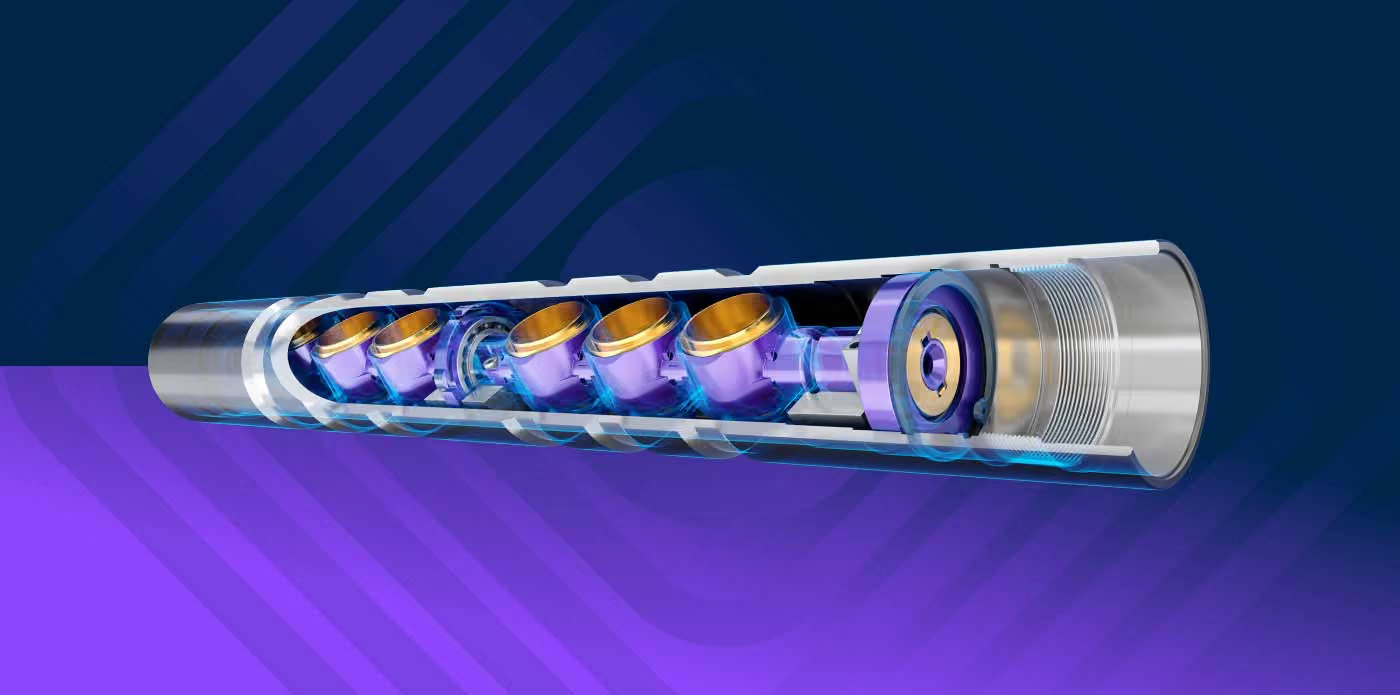


What is pump-down perforating?
At its core, pump-down perforating is all about getting the job done where gravity just won’t cut it. In traditional vertical wells, you can lower wireline tools straight down to the target zone. But with horizontal wells, gravity isn’t much help. That’s where pump-down operations come in. By pumping fluid down the well, crews can push the perforating gun system along the horizontal section, guiding it right to the desired depth.
Once in position, the perforating guns are fired, creating holes in the well casing or liner. These holes (known as perforations) connect the reservoir to the wellbore, letting oil or gas flow to the path of least resistance. It’s a crucial step before hydraulic fracturing can begin. The whole process is designed for precision, speed, and repeatability—all the things you want for your operation.
What downhole tools do you need for pump-down perforating?
Pulling off a successful pump-down perforating job takes more than just a strong crew. It requires the right mix of downhole tools and technology. Here’s a quick rundown of the essentials:
- Wireline Perforating Gun Systems: These are the workhorses of the operation. Modern systems like the PurpleFire perforating gun are engineered for reliability and can be customized for different well conditions.
- Frac Plugs: These plugs are set in the well to isolate sections for staged fracturing. Many systems now combine plug setting and perforating from a single source, saving time and reducing risk. (An integrated tool like the FracSure Max combines a frac plug, perf gun, and setting tool in one handy package.)
- Pressure Control Equipment: Keeping everything safe and under control is non-negotiable. Pressure control gear ensures that the well stays secure during the operation.
- Integrated Systems: Today’s pump-down perforating setups often feature real-time monitoring and automation to boost efficiency and minimize non-productive time.
What are the challenges of pump-down perforating?
Every oilfield operation has challenges, and pump-down perforating is no exception. Here are a few of the most common hurdles and how experienced crews handle them:
- Well Length: Wells are becoming increasingly longer, which means plugs, setting tools, and perforating guns are being deployed to depths 2–3x deeper than before. Robust plug designs to withstand casing wear, reliable electrical connections in perforating guns, and consistent performance from setting tools are critical to avoiding misruns.
- Pressure Control: Maintaining the right pressure is vital. Too much or too little, and you risk equipment failure, costly misruns, or safety incidents. Keep a close eye on lubricator packoff maintenance, wireline wear, and grease injection systems to ensure pressure is where it should be (downhole).
- Tool Deployment: Getting the perforating guns to the exact right spot in a horizontal well isn’t always easy. Pump rates, plug types, and well geometry all play a role. Crews rely on experience, downhole gauges, and sometimes a bit of trial and error to get placement just right. Correlating to the casing tally versus a “ghost pass” can ensure more accurate plug and shot placement over the course of a job.
- Safety: When explosives are involved, safety is always top of mind. Utilizing certain technologies like plug-and-play setting tools and perforating guns minimize equipment handling, rebuild, operator risk, and headcount on location. Fewer moving pieces make for safer wellsite operations.
The oil and gas industry is always looking for ways to do things better, faster, and safer. Pump-down perforating checks all those boxes. It’s especially valuable in today’s horizontal wells, where traditional methods just don’t cut it. With integrated systems, real-time data, and smarter tools, operators can complete wells more efficiently and with fewer headaches.
Want to learn more about how Repeat Precision can help you get the most out of your completion? Contact us now. We’re ready to answer your questions and help you find the best solution for your operation.
.jpg)
