
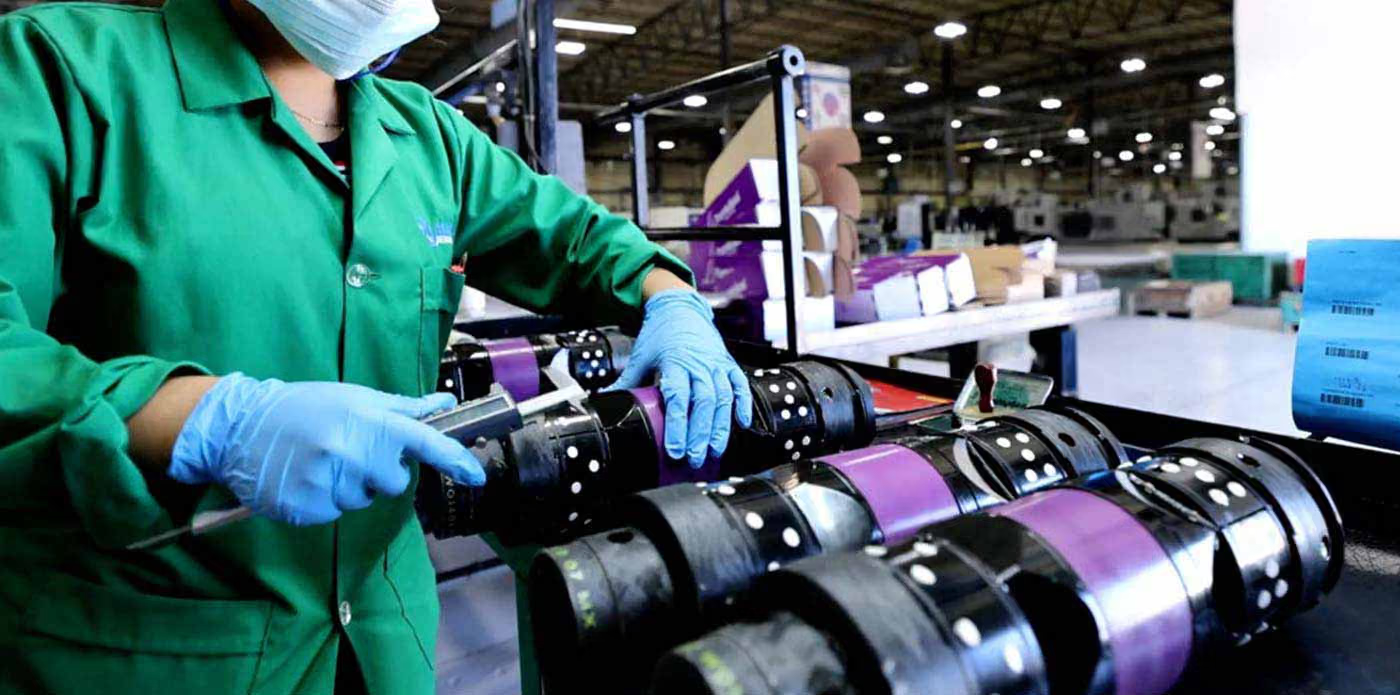


A decade ago, you’d mostly see lighter casing weights like 4.5”, 11.6# or 5.5”, 17#. But starting in the late 2010s, fracs have gotten more intense. Bigger plugs are still running because they can still work, but they aren’t the purpose-built solution required for today’s operations.
It might be time for you to make the switch to an optimized plug that’s designed for heavier walled casing. Keep reading to find out why.
Why use a slimmer plug?
There are lots of reasons why an optimized plug size might be a better fit for your completion:
- Better Fit: Slimmed-down plugs are designed for optimized casing engagement versus a wider range of applications.
- More Reliability: A slimmer plug has more operating room in the annular between the pipe ID (interior diameter) and plug OD (outer diameter), which creates a much more reliable run-in-hole experience.
- Safer RIH Speeds: As a general rule, an optimized plug OD mitigates unnecessary risk during pump down operations.
- Complex Designs: Certain geologies require multi-weight production string designs (e.g., 5.5” , 23# in the vertical and 5.5”, 20# in the horizontal). A plug optimized for the marginal difference between these casing sizes will ensure a better outcome.
READ MORE: Why plug slippage happens (and how to prevent it)
What do optimized plugs look like?
Slimmed-down plugs can look similar to the plugs you’re familiar with. But like the name suggests, a slimmer plug has a narrower design.
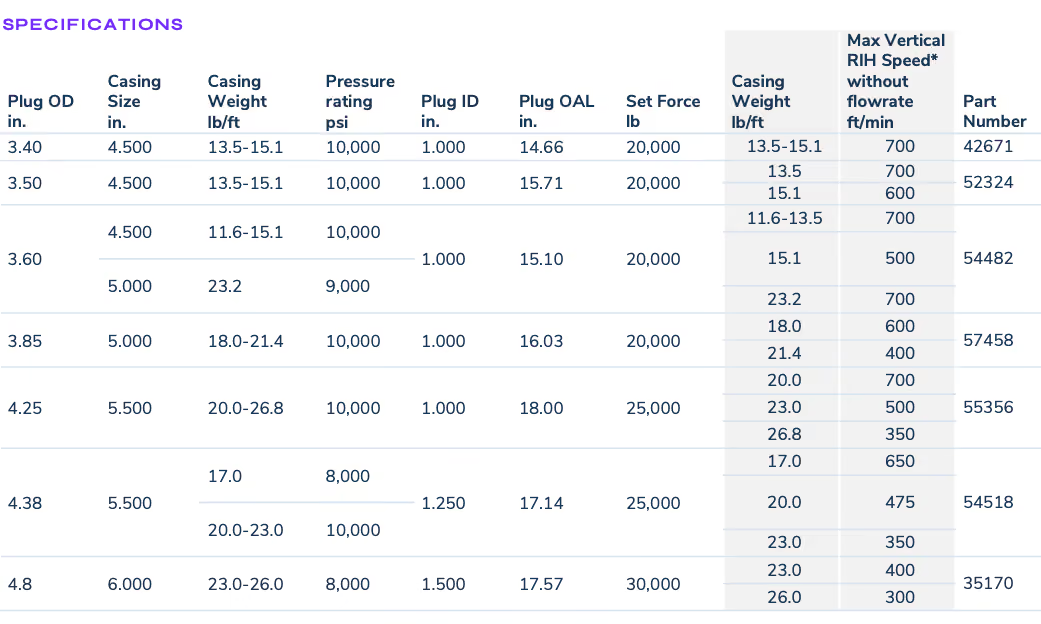
Take the PurpleSeal™ composite frac plug. The 5.5” PurpleSeal comes in a range of OD options to fit different casing weights, starting at 4.25” OD for tighter 23# casing applications and going up to 4.38” OD for 20# casing applications. It may not sound like a lot, but the 0.07” per side could spell the difference between a preset for an improperly deployed plug and making it to setting depth without issue.
Don’t worry—you can’t just simply remove some OD from all the components and call it good. Slimmer plugs require a “clean-sheet” design footprint to ensure that each component properly interacts with the next to maximize rubber element engagement and bite into the casing.
Here’s the full range of sizes that PurpleSeal™ frac plugs are available in.
FREE DOWNLOAD: Get our spec sheet for PurpleSeal™ composite plugs
Different types of frac plugs can also come in different sizes. For example, you could find a slimmer size in both composite and dissolvable plug options, especially when you shop PurpleSeal™ composite plugs and PurpleReign™ dissolvables.
When it comes to frac plugs, size matters—but not always the way you might think. You’ve got to make sure your plug is the right fit for the wellbore, and a slimmed-down plug can be the answer to that problem.
Not sure which size of frac plug to run? Not a problem. Just tell us your casing size and we can help you decide which plug size is best for your application. Contact us today for more information about PurpleSeal™ composite frac plugs.

.jpg)